Gas vs Wood Pizza Oven: Which Should You Buy? (UK)
Gas or wood pizza oven? Compare flavour, ease of use, running cost and cleanup, and see which fuel suits beginners and which suits keen cooks.
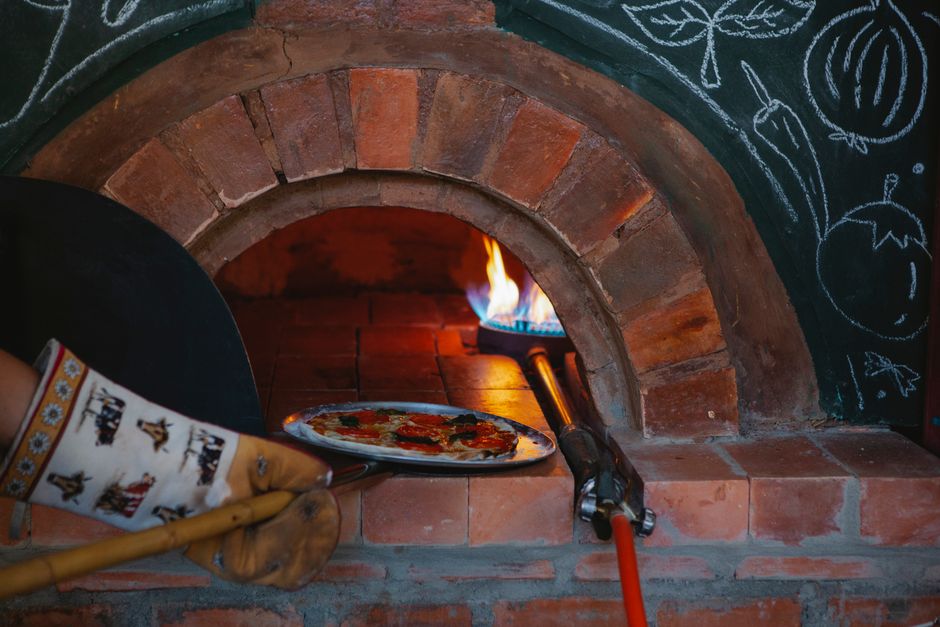
The fuel you choose shapes how a pizza oven feels to use far more than the brand on the front. Gas and wood both reach the roughly 450 to 500C that a proper Neapolitan pizza needs, but they get there in very different ways. The right answer comes down to whether you value convenience or flavour and fire, and how much time you want to spend at the oven.
How do gas and wood compare at a glance?
The differences cluster into six things. Everything else follows from these.
Gas vs wood, dimension by dimension
- Time to cooking temperature
- Gas: 15-20 minutes on a dial. Wood: 20-40 minutes, including establishing the fire before the stone catches up.
- Temperature control
- Gas: turn it up or down and it responds. Wood: managed by fuel and airflow, and it drifts while you cook.
- Flavour
- Gas: clean, and still properly leopard-spotted. Wood: the smoky char that gas cannot reproduce.
- Cleanup
- Gas: brush the stone. Wood: brush the stone, then clear ash after every cook.
- Running cost
- Both are cheap per session. Wood costs time rather than money: fuel to store, a fire to tend, ash to clear.
- Smoke-control rules
- Gas is an authorised smokeless fuel. Wood is not, though outdoor pizza ovens are permitted - see the section below.
- Best suited to
- Gas: weeknights, beginners, small or overlooked gardens. Wood: weekends, and cooks who want the fire to be part of it.
Which is easier to use, gas or wood?
Gas wins comfortably on ease. You turn a dial, wait fifteen to twenty minutes for the stone to heat, and get a repeatable temperature every time. There is no lighting, no feeding a fire and no ash to clear afterwards. Wood is a craft: you build and light a fire, feed it to hold temperature, and manage airflow while the heat rises and falls. For a beginner, or for a quick weeknight dinner, gas removes almost everything that goes wrong.
Does a wood-fired oven really taste better?
There is a genuine flavour difference. Live fire adds a smoky char to the crust that many people prefer, and in blind tastings wood-fired pizzas often come out on top. That said, a good gas oven still produces excellent, properly leopard-spotted Neapolitan pizza; it simply lacks the last layer of wood-smoke character. If flavour is the whole point of the exercise for you, wood or a multi-fuel oven is worth the extra effort.
How long does each take to get to temperature?
Both fuels reach the same place. The question is how long they take and how steady they hold once you are cooking.
A gas oven is usually ready in fifteen to twenty minutes. You light it, leave it, and come back to a stone at temperature. Wood asks for more: you are establishing a fire first, then waiting for the stone to absorb that heat, which in practice means twenty to forty minutes depending on how quickly the fire takes and how cold the oven started.
The part people underestimate is recovery between pizzas. A pizza sitting on the stone pulls heat out of it, and the next one suffers if the oven has not caught back up. On gas you turn the dial up between bakes. On wood you feed the fire and wait, which is fine when you are cooking for two and becomes a rhythm problem when you are cooking for eight. Insulation matters more than fuel here: a well-insulated oven of either type holds its stone temperature far better through a run of pizzas than a thin-walled one.
An infrared thermometer settles all of this. Air temperature inside the oven and stone temperature are different numbers, and it is the stone that decides whether the base cooks through or goes soggy.
What about running cost and cleanup?
Gas is cheap to run per session and leaves nothing to clean beyond the stone. A propane bottle lasts many pizza nights, and there is no ash or soot. Wood and pellets are inexpensive to buy, but they cost you time: kindling and fuel to store, embers to manage, and ash to clear after every cook. Neither is expensive; the real cost of wood is measured in effort rather than money.
Can you burn wood where you live?
This is the question most fuel comparisons skip, and it is worth getting right rather than worrying about vaguely.
Wood is an unauthorised fuel in a smoke control area (a designated zone, covering much of urban England, where what you may burn is restricted). The good news for most people is that outdoor pizza ovens are specifically permitted alongside barbecues and chimineas, so a freestanding wood oven standing on your patio is fine.
Where the restriction does bite is an appliance that vents through a building chimney - a pizza oven built into a garden room or summerhouse, for example. In that situation only authorised fuel may be burned unless the appliance is one Defra has exempted. In England the penalty for a chimney emitting smoke in a smoke control area runs up to £300, and buying unauthorised fuel for use in a non-approved appliance carries a fine of up to £1,000.
Gas sidesteps the question entirely, because gas is on the authorised smokeless list. If you are weighing a built-in installation rather than a freestanding oven, check your own council's smoke-control status before you commit to the fuel, not after.
Which fuel suits your garden and your neighbours?
Fuel choice is partly a question about your outdoor space rather than your cooking.
Storage. Wood and pellets need somewhere dry. Damp fuel is hard to light, burns cool and smokes badly, so a wood oven quietly commits you to a dry corner of a shed or a covered store. Gas needs a propane cylinder, which should live outdoors and upright rather than in a sealed garage or under the stairs.
Smoke drift. A wood fire produces smoke, and on a small terraced patio that smoke goes over a fence. It is rarely a legal problem outdoors and frequently a social one, particularly on still evenings and with washing out. Gas produces effectively none, which is why it tends to be the neighbourly choice in a small garden.
Clearance and surface. Both need to stand well away from walls, fences and overhangs, on something stable and non-combustible. Our guide to whether a pizza oven can go on decking or a wooden table covers that in detail, and the answer differs by oven.
Time of day. A wood oven is a commitment of an hour or so before you eat. Gas makes a Tuesday possible. That single practical difference decides which oven actually gets used, and an oven that gets used beats a better oven that does not.
Can you have the best of both?
Yes. Multi-fuel ovens such as the Ooni Karu 2 and the Gozney Roccbox with its optional wood burner run on wood or charcoal by default and take a gas burner as an add-on (multi-fuel meaning one oven that accepts more than one fuel type). That flexibility lets you cook with fire at the weekend and gas on a weeknight, at the price of buying the extra burner and physically swapping hardware when you change fuel.
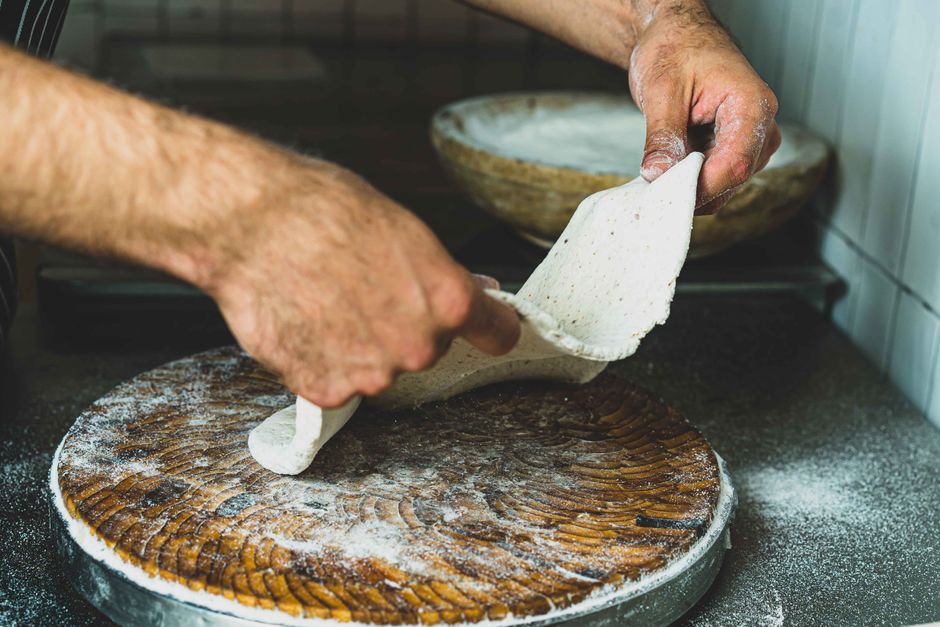
Pizza Dough Calculator: Flour, Water, Salt and Yeast
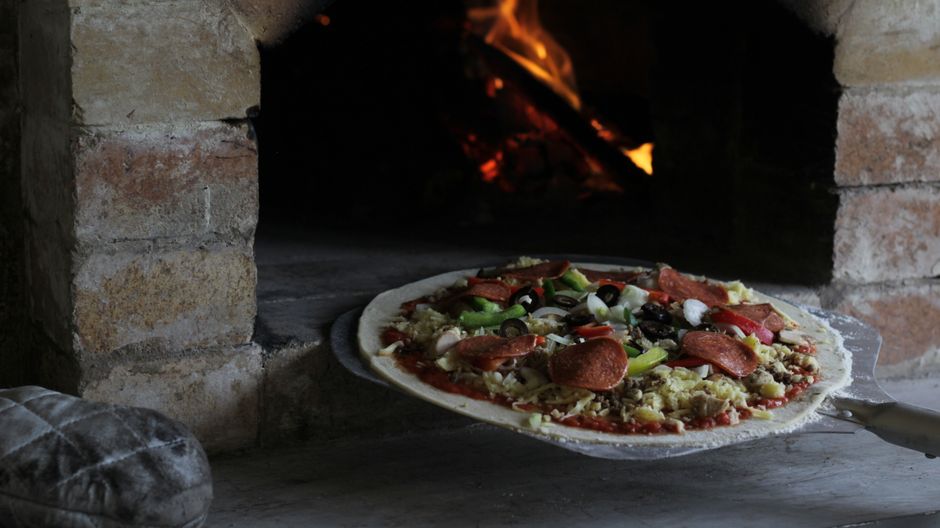
Can You Put a Pizza Oven on Decking or a Wooden Table?
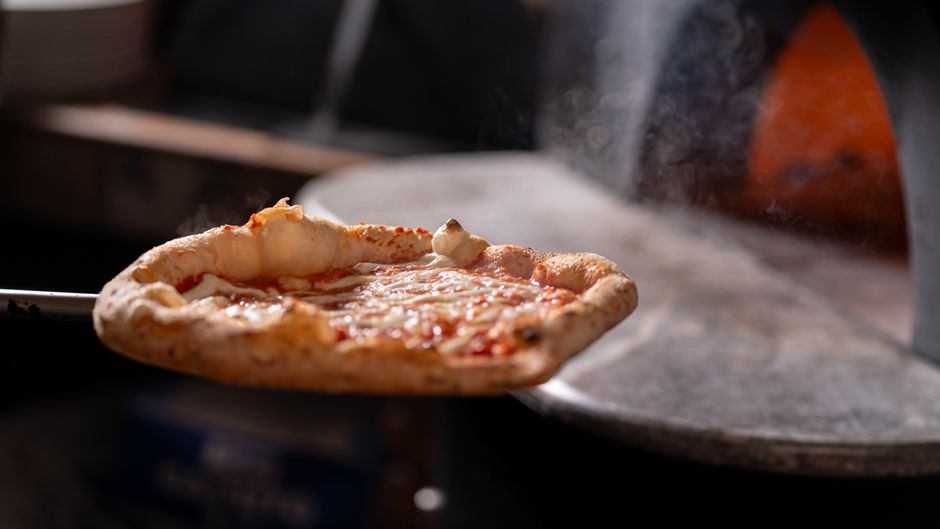
Do You Need an Infrared Thermometer for a Pizza Oven?